
Stress often gets a bad rap. It’s commonly portrayed as the villain behind burnout, anxiety, and exhaustion. But that’s only half the story. Without stress, you’d struggle to get anything done. In fact, healthy stress can be the ultimate ally for high performers—fueling energy, focus, and perseverance.
And yet… it’s all about balance.
Too little stress leaves you feeling flat, demotivated, or even depressed. Too much stress can give the illusion of being unstoppable at first - until it slowly wears your body down from the inside out.
Stress is your body’s natural response to challenges and demands. It triggers a cascade of changes—most notably the release of cortisol from your adrenal glands. Cortisol plays a key role in energy production, metabolism, blood sugar regulation, and mood. Most importantly, it’s the hormone that helps you respond to stress - triggering your body’s fight-or-flight response.
Short-term, acute stress can be highly beneficial: it sharpens focus, speeds up reaction time, and fuels motivation. Scientists often call this eustress—the positive form of stress that drives growth and performance.
The problem arises when stress is too frequent or too prolonged, causing your cortisol levels tofall out of balance or peak at the wrong time during the day.
A healthy cotisol rhythm follows a daily cycle, but chronic stress, poor sleep, bad nutrition, and constant overstimulation can disrupt this pattern. When that happens, symptoms like fatigue, insomnia, anxiety, brain fog, elevated blood sugar, and weight gain can occur.
Stress isn’t the enemy - but dysregulated cortisol absolutely can be.
Everyone has a natural cortisol curve that fluctuates throughout the day:
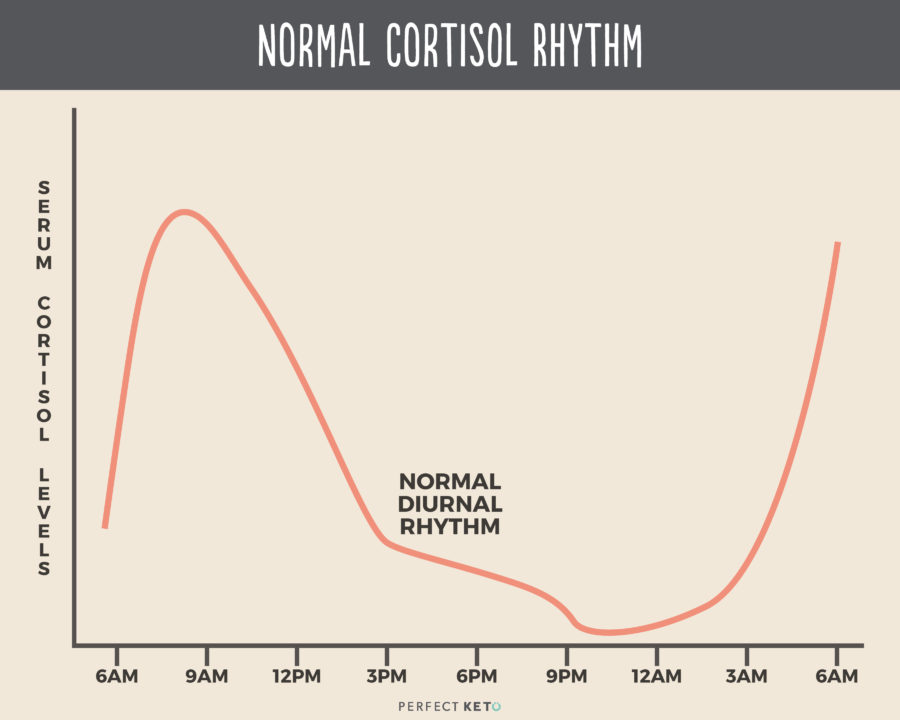
Image: Cortisol curve (credit: Perfect Keto)
When your cortisol rhythm is healthy, you feel energized in the morning, focused during the day, and calm in the evening. But if your rhythm is disrupted—by poor sleep, chronic stress, or lifestyle choices like alcohol, sugar, or stimulants—your body may end up stuck in a state of fatigue, restlessness, and burnout.
A common pattern in people with burnout is a low cortisol peak in the morning and a high peak in the evening — exactly the opposite of what the body needs
Another common issue is consistently high cortisol levels throughout the day. Although it can feel like you’re performing at your peak, your body pays the price over time.
Prolonged high cortisol levels can literally cause parts of your brain to shrink, especially areas involved in memory and concentration. You might find it harder to focus, retain information, or think clearly.
Chronic stress also affects blood sugar. Excess cortisol makes your body less sensitive to insulin, leading to constantly elevated glucose. This can cause cravings for sugar, fat, and salt—your body’s desperate attempt to restore balance.
And it doesn’t stop there. High cortisol also disrupts your hunger hormones—leptin (satiety) and ghrelin (hunger). As a result, you feel less satisfied after eating and may overeat, increasing the risk of abdominal fat gain and even obesity - especially if you notice persistent belly fat, which is often linked to high cortisol.
You can test your cortisol levels through blood, urine, or saliva. Saliva testing is the most practical, as it allows you to measure cortisol at multiple points during the day - creating a full picture of your cortisol curve.
But let’s be honest - if you’re reading this article, you probably suspect your cortisol is off. This quick self-test can help confirm it:
If you answered ‘yes’ to several of these questions, your cortisol may be too high.
If this sounds like you, low cortisol may be the cause.
Stress is not your enemy. It can be a powerful ally - if you learn to listen to your body. It fuels your goals, your growth, and your grit. But like any high-performance engine, if you keep revving it at maximum capacity without pause, you’ll burn it out.
Learn working with together with stress and listen to your body - to know when to push and when to pause. That’s the true edge of a high performer: not just going harder, but going smarter.



Stress often gets a bad rap. It’s commonly portrayed as the villain behind burnout, anxiety, and exhaustion. But that’s only half the story. Without stress, you’d struggle to get anything done. In fact, healthy stress can be the ultimate ally for high performers—fueling energy, focus, and perseverance.
And yet… it’s all about balance.
Too little stress leaves you feeling flat, demotivated, or even depressed. Too much stress can give the illusion of being unstoppable at first - until it slowly wears your body down from the inside out.
Stress is your body’s natural response to challenges and demands. It triggers a cascade of changes—most notably the release of cortisol from your adrenal glands. Cortisol plays a key role in energy production, metabolism, blood sugar regulation, and mood. Most importantly, it’s the hormone that helps you respond to stress - triggering your body’s fight-or-flight response.
Short-term, acute stress can be highly beneficial: it sharpens focus, speeds up reaction time, and fuels motivation. Scientists often call this eustress—the positive form of stress that drives growth and performance.
The problem arises when stress is too frequent or too prolonged, causing your cortisol levels tofall out of balance or peak at the wrong time during the day.
A healthy cotisol rhythm follows a daily cycle, but chronic stress, poor sleep, bad nutrition, and constant overstimulation can disrupt this pattern. When that happens, symptoms like fatigue, insomnia, anxiety, brain fog, elevated blood sugar, and weight gain can occur.
Stress isn’t the enemy - but dysregulated cortisol absolutely can be.
Everyone has a natural cortisol curve that fluctuates throughout the day:
Image: Cortisol curve (credit: Perfect Keto)
When your cortisol rhythm is healthy, you feel energized in the morning, focused during the day, and calm in the evening. But if your rhythm is disrupted—by poor sleep, chronic stress, or lifestyle choices like alcohol, sugar, or stimulants—your body may end up stuck in a state of fatigue, restlessness, and burnout.
A common pattern in people with burnout is a low cortisol peak in the morning and a high peak in the evening — exactly the opposite of what the body needs
Another common issue is consistently high cortisol levels throughout the day. Although it can feel like you’re performing at your peak, your body pays the price over time.
Prolonged high cortisol levels can literally cause parts of your brain to shrink, especially areas involved in memory and concentration. You might find it harder to focus, retain information, or think clearly.
Chronic stress also affects blood sugar. Excess cortisol makes your body less sensitive to insulin, leading to constantly elevated glucose. This can cause cravings for sugar, fat, and salt—your body’s desperate attempt to restore balance.
And it doesn’t stop there. High cortisol also disrupts your hunger hormones—leptin (satiety) and ghrelin (hunger). As a result, you feel less satisfied after eating and may overeat, increasing the risk of abdominal fat gain and even obesity - especially if you notice persistent belly fat, which is often linked to high cortisol.
You can test your cortisol levels through blood, urine, or saliva. Saliva testing is the most practical, as it allows you to measure cortisol at multiple points during the day - creating a full picture of your cortisol curve.
But let’s be honest - if you’re reading this article, you probably suspect your cortisol is off. This quick self-test can help confirm it:
If you answered ‘yes’ to several of these questions, your cortisol may be too high.
If this sounds like you, low cortisol may be the cause.
Stress is not your enemy. It can be a powerful ally - if you learn to listen to your body. It fuels your goals, your growth, and your grit. But like any high-performance engine, if you keep revving it at maximum capacity without pause, you’ll burn it out.
Learn working with together with stress and listen to your body - to know when to push and when to pause. That’s the true edge of a high performer: not just going harder, but going smarter.